The Condiment Trap: How Your Favorite Sauces and Dressings Are Quietly Kicking You Out of Ketosis

You meal-prepped like a champ. Grilled chicken, roasted broccoli, a solid fat source — textbook keto. Then you reached for the bottle of sauce on the counter without a second thought, and just like that, your carefully constructed meal quietly crossed into carb territory you didn't plan for.
This is the condiment trap, and it catches even the most disciplined keto eaters off guard. The truth is, the biggest hidden carb threats in most American kitchens aren't lurking in the bread aisle — they're in those squeeze bottles, jars, and packets crammed into the back of your fridge.
Let's break down exactly what's going on, which offenders are the worst, and how you can still have flavorful food without torching your ketosis.
Why Condiments Are Such a Problem on Keto
Here's the thing about sauces and dressings: we don't think of them as food. They're flavor add-ons, finishing touches, the stuff you barely notice putting on your plate. That mindset is exactly why they're so dangerous on a ketogenic diet.
Food manufacturers know Americans love bold, sweet, tangy flavors. To deliver those flavors cheaply and consistently, they lean hard on sugar, corn syrup, and other fast-digesting carbohydrates. Since condiments are used in small amounts, the carb counts per serving can seem harmless — but those serving sizes are almost always unrealistically tiny. Nobody uses exactly one tablespoon of ketchup. Nobody.
When you're operating on a daily carb budget of 20–25 grams to stay in ketosis, a few thoughtless squirts of the wrong sauce can burn through 10–15 grams before you even sit down to eat.
The Worst Offenders in Your Pantry
Ketchup is probably the most famous sugar bomb hiding in plain sight. A single tablespoon of a major brand like Heinz clocks in around 4–5 grams of carbs — nearly all from sugar. Most people use three to four tablespoons at a time, which means a casual dipping session can cost you 15–20 grams of carbs without blinking.
Barbecue sauce is arguably worse. Sweet Baby Ray's, the bestselling BBQ sauce in the US, has about 17 grams of carbs per two tablespoons. That's almost an entire day's worth of carbs for strict keto followers, in two spoonfuls. Smoked, tangy, and absolutely loaded.
Teriyaki sauce is a sneaky one because it feels healthy — it's associated with Japanese cuisine and lean proteins. But traditional teriyaki is basically soy sauce sweetened aggressively with sugar or mirin. A two-tablespoon serving can run 8–12 grams of carbs depending on the brand.
Honey mustard sounds innocent enough. Mustard is keto-friendly, right? Sure — until you add honey. Most store-bought honey mustard dressings carry 5–7 grams of carbs per tablespoon, and that number climbs fast when you're dipping or dressing a salad.
Sweet chili sauce is one of those condiments that's become hugely popular in American kitchens over the last decade. It's also one of the most carb-dense things you can put on food, often hitting 8–10 grams per tablespoon.
Bottled salad dressings deserve their own category of concern. Fat-free and low-fat versions are especially dangerous — manufacturers replace fat with sugar and starch to maintain flavor. Even "light" versions of popular ranch, Italian, or balsamic dressings can carry 4–8 grams of carbs per serving. Full-fat ranch is generally a safer bet, but always flip the bottle over and read the label.
Pasta sauce and marinara catch a lot of people off guard. It seems like a keto-reasonable choice — tomatoes, olive oil, garlic. But most jarred marinara sauces are sweetened, and even the unsweetened versions can carry 8–12 grams of carbs per half-cup serving due to natural tomato sugars.
Reading Labels Like a Keto Detective
Once you know what to look for, spotting the carb bombs gets easier. Here's a quick checklist when you're evaluating any condiment:
- Check the serving size first. If it says 1 teaspoon or 1 tablespoon, mentally multiply by how much you actually use.
- Look at total carbs, not just sugar. Some products use sugar alcohols or starches that still affect blood sugar even if they're not listed under "sugars."
- Scan the ingredients list for these red flags: high fructose corn syrup, cane sugar, honey, maltodextrin, modified food starch, and fruit juice concentrate.
- "Natural" and "organic" don't mean low-carb. Organic ketchup is still ketchup. Organic cane sugar is still sugar.
Smart Swaps That Actually Taste Good
The good news is you don't have to eat dry, flavorless food on keto. You just need to know your alternatives.
Instead of ketchup: Try a sugar-free ketchup like Primal Kitchen or G Hughes, which use stevia or monk fruit and clock in under 1 gram of carbs per serving. Or make a quick homemade version with tomato paste, apple cider vinegar, a pinch of salt, and your preferred keto sweetener.
Instead of BBQ sauce: G Hughes makes a solid sugar-free BBQ sauce in multiple flavors. You can also blend sugar-free ketchup with smoked paprika, garlic powder, apple cider vinegar, and a drop of liquid smoke for a fast homemade version.
Instead of teriyaki: Coconut aminos with a splash of sesame oil and a keto sweetener like erythritol comes incredibly close to the real thing with a fraction of the carbs.
Instead of honey mustard: Mix plain yellow or Dijon mustard with a small amount of keto-friendly sweetener and a touch of apple cider vinegar. Seriously simple, seriously good.
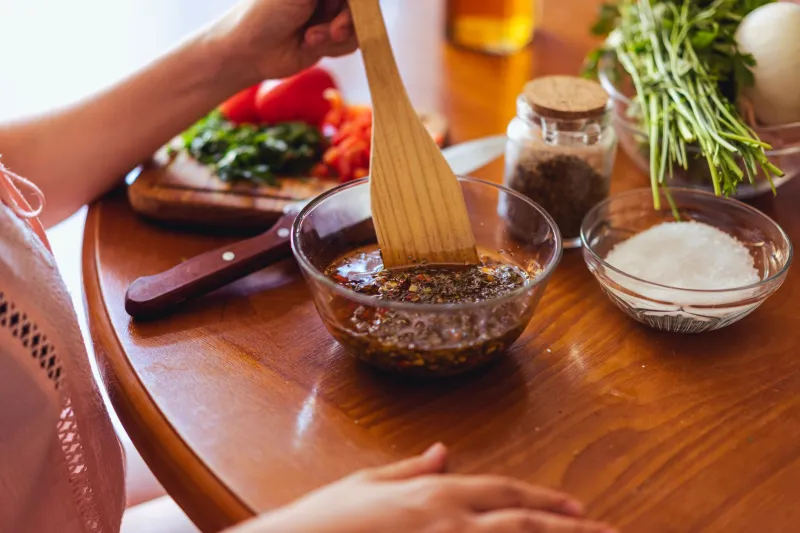
Instead of bottled dressing: Make your own vinaigrette with olive oil, red wine vinegar, Dijon mustard, garlic, salt, and pepper. It takes about two minutes, costs almost nothing, and has essentially zero carbs.
Building a Keto-Safe Condiment Shelf
Once you do a sweep of your pantry and fridge, you'll want to restock with items that won't ambush your macros. Here are some genuinely keto-friendly staples worth keeping on hand:
- Plain yellow mustard and Dijon mustard (avoid honey mustard)
- Hot sauce (most are zero or near-zero carbs — Tabasco, Frank's RedHot, cholula in moderation)
- Coconut aminos (lower carb than soy sauce, great umami flavor)
- Full-fat mayonnaise (check labels — some brands sneak in sugar)
- Avocado oil-based dressings from brands like Primal Kitchen
- Unsweetened soy sauce or tamari
- Worcestershire sauce (use sparingly — small amounts are generally fine)
The Bigger Picture
The reason condiments are such an effective keto saboteur is psychological as much as nutritional. We track our main meals, we count our macros, we avoid the obvious carbs — and then we completely zone out when it comes to the stuff we pour, dip, and drizzle on everything.
Flipping that habit is genuinely simple once you're aware of it. A quick label check before you grab a bottle, a few easy swaps in your fridge, and maybe a Sunday afternoon batch of homemade dressing — that's really all it takes to close one of the most common leaks in an otherwise solid keto strategy.
Your meals are doing the heavy lifting. Don't let what's on the side of your plate quietly undo all of that work.